There is something about Japan that lends itself perfectly to mystery fiction. The tension between surface harmony and hidden turmoil, the weight of social obligation pressing against individual guilt, the way ancient ritual coexists with hyper-modern cities: all of it creates a pressure cooker that crime writers have exploited brilliantly for decades. When a body turns up in a mountain onsen or a locked study in Tokyo, the stakes feel distinctly, compellingly Japanese.
I came to Japanese crime fiction through Keigo Higashino, like so many Western readers did, and found myself completely unable to stop. What struck me first was not just the plotting (though the plotting is frequently astonishing) but the atmosphere. These books carry a mood that Western crime fiction rarely replicates: a particular quietness around grief, a reluctance to name emotions directly that somehow makes every revelation hit harder. The mystery genre here does double duty, exploring sociology and psychology alongside whodunit mechanics.
Whether you are a longtime devotee or just dipping your toes in, this list covers best mystery books set in Japan across different styles and eras. From philosophical puzzle-boxes to procedural thrillers drenched in rain-soaked Tokyo alleyways, there is something here for every kind of mystery reader.
The Best Mystery Books Set in Japan
The Devotion of Suspect X by Keigo Higashino
If you read only one book from this list, make it this one. Higashino’s masterpiece is an inverted mystery, meaning we know from the very first pages who committed the crime and roughly how. What we do not know is how the impossibly brilliant mathematician Ishigami has hidden it. The book then becomes a chess match between Ishigami and Detective Kusanagi, with physicist Yukawa (known as “Detective Galileo”) consulting on the case.
What elevates this beyond clever plotting is the emotional core. Ishigami’s devotion to his neighbour Yasuko is heartbreaking in its restraint, never spoken aloud, expressed entirely through an act of monstrous, loving sacrifice. Higashino is not interested in simple moral categories, and this book proves it on every page.
The ending will stay with you. I finished it on a Tuesday afternoon and thought about it for the rest of the week. Genuinely one of the finest crime novels written in any language.
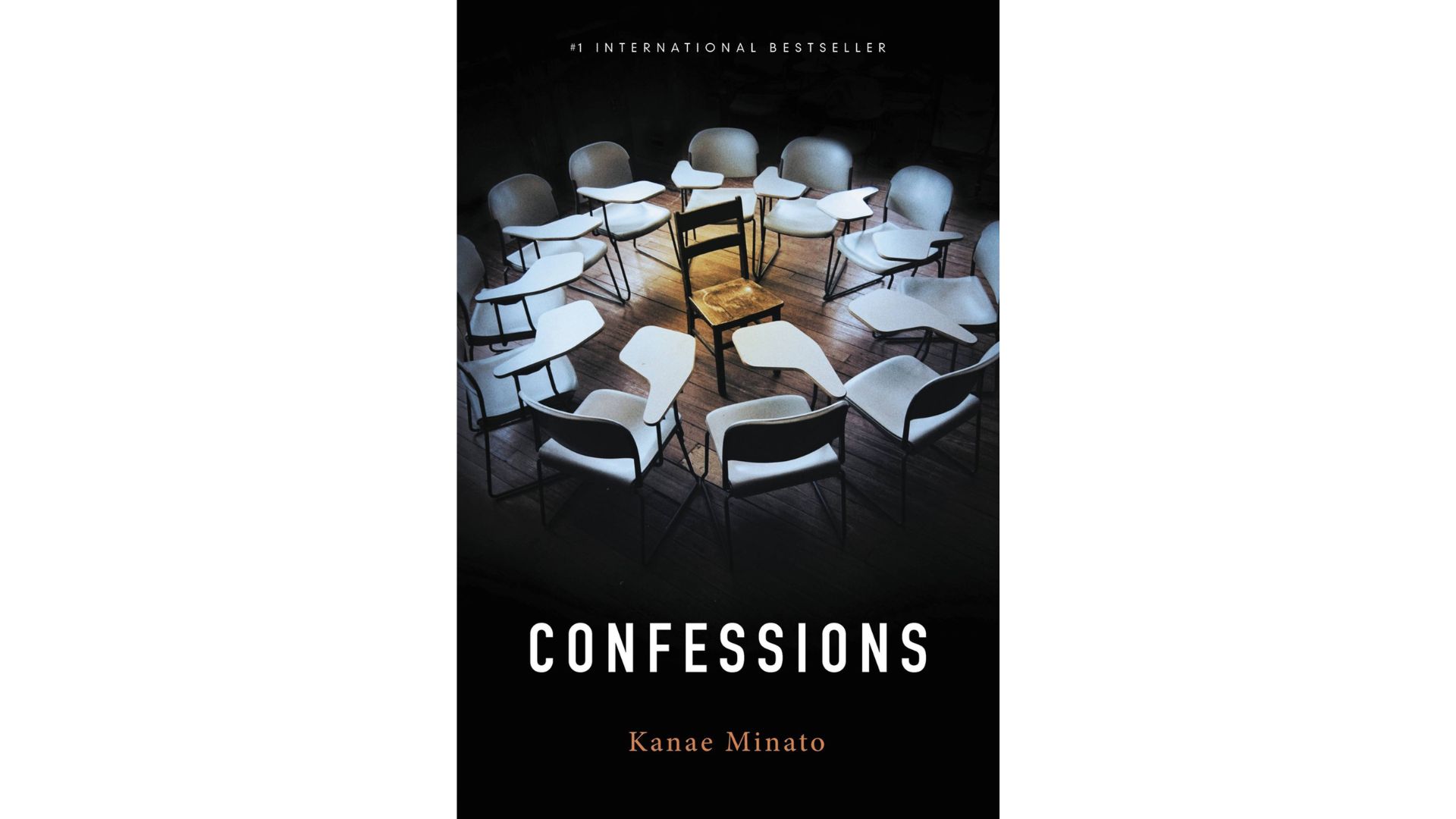
Confessions by Kanae Minato
Dark does not begin to cover it. Minato’s debut novel opens with a middle school teacher calmly informing her class that she knows which two students killed her daughter, and that she has already begun her revenge. The structure is brilliant: each chapter gives us a different narrator’s perspective on the same events, peeling back layer after layer of manipulation, trauma, and moral collapse.
This is psychological crime fiction at its most unnerving. Minato is particularly sharp on the cruelties of adolescence and the failures of the adults who are supposed to protect children. The Japanese school system, with its rigid social hierarchies, becomes a perfect pressure cooker for the story’s escalating horror.
It is not a comfortable read. But it is an unforgettable one, and the translation by Stephen Snyder captures the chilling flatness of the narrator’s voice with precision.
Out by Natsuo Kirino
Four women work the night shift at a boxed-lunch factory outside Tokyo. One of them strangles her abusive husband. The others help her dispose of the body. What follows is a brutal, propulsive examination of desperation, female solidarity, and the violence that simmers beneath ordinary life.
Kirino does not romanticise her characters or their choices. These women are complicated, sometimes unlikeable, always entirely human. The thriller mechanics are tight, but the social commentary is what gives the book its real weight. She is writing about exploitation, about what women are expected to absorb quietly and what happens when they finally stop.
Out caused a sensation in Japan when it was published in 1997 and its impact has not faded. If you appreciate crime fiction that also functions as fierce cultural criticism, this belongs on your shelf immediately.
The Inugami Curse by Seishi Yokomizo
For readers who love classic golden age mysteries, Yokomizo is essential. Written in 1950, this novel introduces the eccentric detective Kosuke Kindaichi and sends him into the Inugami family’s spectacular dysfunction. A patriarch’s death triggers a fight over inheritance, and bodies start accumulating with gleeful, baroque regularity.
The atmosphere here is lush and theatrical. Yokomizo draws on traditional Japanese imagery, masks, family shame, wartime legacies, to create something that feels distinctly rooted in its time and place while still delivering that golden age pleasure of an intricate puzzle clicking into place. The recent Pushkin Vertigo translations have made this and several other Kindaichi novels widely accessible.
Think of it as Agatha Christie filtered through a distinctly Japanese sensibility. That is meant as the highest possible compliment.
Parade by Shuichi Yoshida
Technically this sits at the literary fiction end of the crime spectrum, but the mystery at its heart is so carefully constructed that it absolutely earns a place here. Five young people share an apartment in Tokyo. We get each of their perspectives in rotating chapters, and slowly a sense of wrongness accumulates. Someone in the apartment is hiding something serious.
Yoshida is interested in how well we actually know the people we live alongside. The answer, it turns out, is barely at all. The final revelation recontextualises everything that came before it, and the book rewards re-reading in a way that few novels do.
The prose is clean and observational, the Tokyo milieu sharply drawn. For readers who want their mystery with a literary finish, Parade is the one.
A Midsummer’s Equation by Keigo Higashino
Higashino earns a second entry because his Detective Galileo series is simply that good. In this installment, physicist Yukawa visits a sleepy seaside town involved in a dispute over underwater mining. A man dies, apparently by accident. Yukawa, as always, suspects things are considerably more complicated.
What makes this particular entry special is its focus on a young boy who befriends Yukawa during the investigation. The relationship adds warmth to the usual cerebral fireworks, and Higashino uses it to explore themes of parental guilt and the long shadows that old crimes cast over innocent lives. The resolution is genuinely moving.
If The Devotion of Suspect X is the place to start, A Midsummer’s Equation is where you see the full range of what Higashino can do emotionally.
Strange Weather in Tokyo by Hiromi Kawakami
Another literary-leaning entry, and the mystery here is subtle: the mystery of other people, of love, of the strange territory between friendship and something more. Tsukiko, a woman in her late thirties, begins meeting her old high school teacher at a neighbourhood bar. Their quiet relationship develops over sake and small shared meals.
There is no murder, no detective. But Kawakami creates a persistent sense of things unsaid and unknown that functions like a mystery of character. The book is short, achingly beautiful, and suffused with a Japanese aesthetic sensibility around impermanence and restraint that I find irresistible. I include it here for readers who want to understand the emotional texture that underlies so much Japanese crime fiction.
Read it in one sitting if you can. It earns that kind of attention.
The Aosawa Murders by Riku Onda
This is the one for puzzle-lovers who also want literary ambition. A mass poisoning at a party kills most of a prominent family, except for the blind daughter Hisako, who may or may not have orchestrated everything. Decades later, a true crime writer investigates the case, and the book assembles itself from interviews, documents, and competing accounts.
Onda is playing sophisticated games with narrative reliability and the nature of truth. Every witness remembers differently. Every account reveals as much about the teller as about the event. The mystery never fully resolves, which will frustrate some readers and delight others. I was delighted.
The translation by Alison Watts is superb. This is one of the most formally inventive crime novels I have read in years.
Lady Joker by Kaoru Takamura
Takamura’s doorstop of a novel (over 800 pages in the English translation) is one of the most ambitious crime novels ever written in Japanese. A group of men with quiet grievances against Japanese society kidnap a beer company executive and demand a ransom. The investigation spirals outward to touch corporate corruption, discrimination, journalism ethics, and postwar trauma.
This is crime fiction as social epic. Takamura spent years researching it, and every page shows. The book was a sensation in Japan and finally received its English translation in 2021. It demands patience but rewards it extravagantly.
Think of it as the Japanese equivalent of a great American crime novel like The Wire in prose form. Ambitious, dense, and completely gripping.
The Gun by Fuminori Nakamura
Nakamura writes in a darker, more existential register than most of the authors on this list. His debut novel follows a university student who finds a gun next to a dead man and keeps it, becoming gradually obsessed with the weapon and what it might mean to use it. Crime fiction as psychological portrait, as study in compulsion.
The prose style is spare and hypnotic, clearly influenced by Camus and the French existentialists while remaining distinctly rooted in contemporary Tokyo. Nakamura is interested in moral vacancy, in the question of whether some people simply lack the interior structures that prevent violence. It is uncomfortable reading in the best way.
His later novel The Thief covers similar territory and is also worth your time, but The Gun is where I would start.
Final Thoughts
Japanese crime fiction rewards readers who are willing to meet it on its own terms. The pacing can be more deliberate than American thrillers, the emotional expression more oblique, the moral resolutions less tidy. But the craft is consistently extraordinary, and the best of these novels offer something that genre fiction anywhere rarely achieves: a window into a whole society’s anxieties and dreams.
I have my personal favourites on this list (Higashino and Onda, if you are asking), but every entry here has something distinctive to offer. Start anywhere that catches your interest. You will almost certainly find yourself wanting more.
Have you read any of these? Are there Japanese mystery writers you love that I have left off this list? What is your version of best mystery books set in Japan? I would genuinely love to know. Leave a comment below and let’s talk books.