Keigo Higashino is a master of the mystery genre, and I’ve thoroughly enjoyed many of his works. But Masquerade Hotel is different from his usual fare in the best possible way. While it contains murders, several of them, this isn’t your typical Higashino murder mystery. Instead, it’s a brilliant character study wrapped in a murder investigation, set against the fascinating backdrop of a luxury hotel.
This review may contain spoilers; read at your own risk.
The Plot
Three murders have occurred across Tokyo, and each crime scene contains a series of cryptic numbers: coordinates that hint at the location of the next murder. Detective Kosuke Nitta of the Tokyo Metropolitan Police Department deciphers these codes and discovers that the next crime will take place at Hotel Cortesia Tokyo, one of the city’s most prestigious five-star establishments.
With no clue as to the culprit’s identity, the police decide to investigate from within. Nitta goes undercover, posing as a front desk clerk at the hotel. Assigned to train him is Naomi Yamagishi, a first-rate hotel receptionist who takes her job and the hotel’s reputation extremely seriously.
The tension between them is immediate and palpable. Nitta is focused on unveiling the “masks” of hotel guests to discover who the killer is, while Naomi’s priority is the comfort, safety, and privacy of every guest. They are, quite simply, like oil and water.
As various suspicious guests check in and out of Hotel Cortesia, Nitta and Naomi must navigate their differences while racing against time to prevent the next murder.
A Different Kind of Mystery
What sets Masquerade Hotel apart from Higashino’s other works is its focus. Yes, there are murders. Yes, there’s a serial killer. But the murders serve as a backdrop for something more nuanced—the interaction between hotel staff, guests, and undercover police.
Rather than one big investigation driving the narrative forward, this book is about preventing a murder before it happens. The story unfolds through small plots involving various hotel guests, each with their own quirks, secrets, and peculiar requests. Through these seemingly unrelated encounters, Nitta gradually pieces together clues about the previous murders and the killer’s identity.
The first half of the book is structured in an episodic manner, focused on developing the relationship between Nitta and Naomi while offering insight into the crucial role hotel staff play in ensuring guest satisfaction. Each episode plays an integral role in helping both characters gain a better understanding of each other and grasp the meaning of their occupational positions.
The Heart of the Story: Nitta and Naomi
The real highlight of Masquerade Hotel is the relationship between Detective Kosuke Nitta and receptionist Naomi Yamagishi. Their dynamic is what makes this book truly memorable.
Nitta quickly discovers that embodying the image of hotel staff isn’t just about wearing a uniform and roughly looking the part. One’s body language, facial expressions, gait, and posture all need to breathe graciousness and an inviting openness toward guests. One’s presence needs to be refined.
Through their interactions, we watch them evolve from antagonistic strangers to professional colleagues who genuinely care about each other. Naomi teaches Nitta about hospitality, dedication, and seeing beyond surface appearances. Nitta, in turn, teaches Naomi about questioning assumptions and recognizing that not all guests are what they seem.
Their gradual shift from clashing personalities to mutual respect and trust is beautifully rendered. By the end, you can feel the genuine connection between them.
The One Flaw
I do have one criticism: Nitta becomes too trusting of Naomi too quickly. There are moments where he slips police secrets to her that, realistically, an undercover officer wouldn’t share. While I understand this serves the narrative and their developing relationship, it does stretch credibility somewhat. A seasoned detective should be more careful about operational security, even with someone he’s growing to trust.
The Guests Gallery
One of the book’s greatest pleasures is the parade of hotel guests, each with their own bizarre antics and unusual requests. From Takahito Ayabe who complains about cigarette smells in his non-smoking room, to Eriko Yasuno who attempts to hide from a stalker, to the mysterious blind woman Yoko Katagiri. Each guest adds layers to both the mystery and the exploration of what it means to wear a “mask” in society.
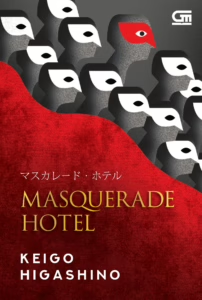
The symbolism of masks runs throughout the story. Every guest wears a social mask, presenting a carefully crafted image to the world. Hotel staff like Naomi also wear the mask of professionalism, maintaining distance while showing only their best selves. This duality between who people truly are and who they present to the outside world makes you think about the masks we all wear in our daily lives.
These guest encounters aren’t just filler, they’re integral to Nitta’s investigation and to the book’s thematic exploration of identity, trust, and appearances versus reality.
The Twist
Like all of Higashino’s works, Masquerade Hotel features a plot twist that makes the entire book worth reading. Even if you manage to guess who the culprit is (and that’s a big if), I seriously doubt you’ll guess their motive for the murders. That’s the genius of Higashino’s writing.
The revelation of how these murders were conducted and why completely recontextualizes everything you’ve read. It’s the kind of twist that makes you want to immediately reread the book to catch all the clues you missed the first time around. The motive is unexpected, clever, and deeply human.Final Thoughts
Masquerade Hotel is a refreshing departure from Higashino’s usual style while maintaining everything that makes his mysteries so compelling. It’s a page-turner that prioritizes character development and thematic depth without sacrificing the ingenious plotting and shocking twists we expect from this master storyteller.
The book succeeds on multiple levels: as a murder mystery, as a character study, as an exploration of hospitality culture, and as a meditation on the masks we all wear. The relationship between Nitta and Naomi anchors the entire story, giving emotional weight to the procedural elements.
If you’re a fan of Higashino’s work, this book will surprise you in the best way. If you’re new to his writing, this is an excellent entry point that showcases his versatility as an author. The combination of clever mystery, engaging characters, fascinating setting, and brilliant twist makes Masquerade Hotel an absolute must-read.
Rating: 5 Muse Points
About the Author
Keigo Higashino is one of Japan’s most popular and bestselling mystery writers. His works include The Devotion of Suspect X, Malice, Newcomer, and the Detective Galileo series. Masquerade Hotel is the first book in a series featuring Detective Nitta and has been adapted into a successful Japanese film starring Takuya Kimura and Masami Nagasawa, with a sequel Masquerade Night released in 2021.