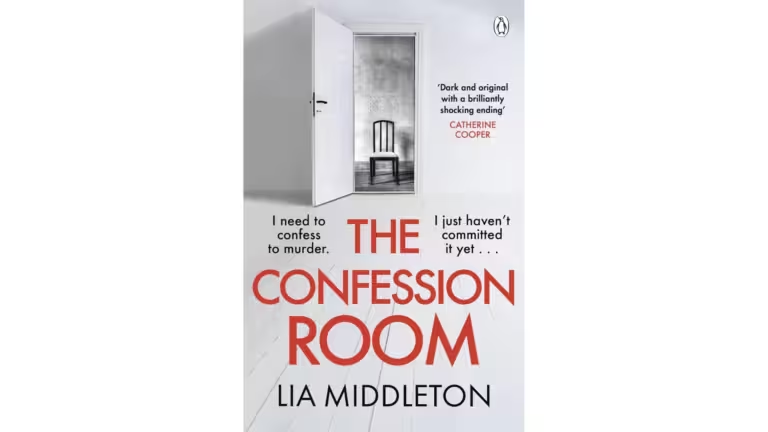
The Escape Room by Megan Goldin promises an intriguing premise: four Wall Street hotshots trapped in an elevator, forced to solve puzzles to escape. With its sleek cover and tantalizing blurb about corporate greed meeting deadly consequences, this thriller seemed like it would deliver a nail-biting locked-room mystery. Unfortunately, what I found inside was quite different from what the title suggests.
This review may contain spoilers; read at your own risk.
The Setup
The story follows four ambitious investment bankers from Stanhope & Sons — Vincent, Jules, Sylvie, and Sam — who are summoned for what they believe is a team-building exercise in an escape room. Instead, they find themselves trapped in an elevator with cryptic messages appearing on a screen, supposedly providing clues to their escape. Alternating with this present-day scenario are flashback chapters following Sara Hall, a young woman trying to break into the cutthroat world of Wall Street finance.
The premise sounds promising, doesn’t it? A high-stakes corporate thriller with puzzle-solving elements and morally questionable characters getting their comeuppance. What could go wrong?
The Problem with the Escape Room
Here’s the thing that bothered me most about this book: this is not actually an escape room. Yes, four characters are trapped in an elevator. Yes, they receive messages that are called “clues.” But there are never any real escaping elements, and the so-called clues don’t actually help them escape at all.
If you’re picking up this book because you love escape rooms or enjoy puzzle-solving mysteries, you’ll be disappointed. The riddles are simplistic and they serve more as psychological torment than genuine puzzles. The characters aren’t working together to solve intricate challenges; they’re just… waiting around while their dark secrets are revealed.
It feels misleading, like ordering a mystery novel and getting a romance instead. Not that there’s anything wrong with either genre, but you expect what’s advertised on the tin.
Characters You Won’t Root For
Let’s talk about our protagonists, and I use that term loosely. Vincent, Jules, Sylvie, and Sam are selfish, obnoxious, and thoroughly unlikeable. Now, I understand that this is intentional — Goldin is clearly making a statement about corporate greed and the toxic culture of high finance. These characters are meant to represent everything wrong with Wall Street’s obsession with money and status.
But here’s the issue: when your main characters are this detestable, it becomes hard to care about their fate. I found myself not particularly invested in whether they escaped or not. In fact, part of me was rooting for their downfall, which might have been the author’s intention, but it doesn’t make for an engaging reading experience when you’re actively hoping for the protagonists to fail.
Sara Hall, the character from the flashback chapters, is more sympathetic, but even she becomes difficult to connect with as the story progresses and her motivations become clearer.
The Pacing
The back-and-forth structure between present-day elevator scenes and past events creates a jarring reading experience. I think books should come with a warning sticker about this type of narrative pacing! While some readers enjoy the alternating timeline format, I found it disruptive to the flow of the story.
The present-day chapters lose momentum as we wait for the flashback storyline to catch up, and by the time both timelines converge, you might find yourself caring less about the resolution than you did at the beginning. The author seems to use this structure to build suspense, but instead, it often deflates the tension that’s trying to build in the elevator scenes.
What Works
I won’t completely dismiss The Escape Room. The book does have some redeeming qualities that keep it from being a complete disappointment.
Fast-paced and mindless reading: If you’re looking for a quick, undemanding read for a beach vacation or a long flight, this book delivers. Despite its flaws, it moves quickly and doesn’t require deep intellectual engagement. Sometimes that’s exactly what you need.
Corporate culture commentary: Goldin’s critique of Wall Street culture is sharp and often on-target. The descriptions of the toxic work environment, the pressure to succeed at any cost, and the dehumanizing effects of extreme wealth feel authentic and relevant.
Writing quality: While the story structure is problematic, Goldin’s actual writing is competent. She creates vivid scenes and maintains a consistent tone throughout the book.
Read the fast-paced thriller here:

Final Thoughts
The Escape Room feels like a missed opportunity. With such a promising premise, it could have been a clever combination of psychological thriller and puzzle-solving mystery. Instead, it’s more of a revenge thriller masquerading as something it’s not.
The book succeeds as a quick, mindless read that offers some commentary on corporate greed, but it fails to deliver on the escape room concept that draws readers in. If you’re looking for actual puzzle-solving elements or characters you can root for, you’ll want to look elsewhere.
For readers who enjoy dark corporate thrillers and don’t mind unlikeable characters, this might be worth a try—just don’t expect the escape room experience the title promises.
Rating: 3 out of 5 muse points
About the Author
Megan Goldin worked as a correspondent for Reuters and other media outlets, covering international events across the Middle East and Asia. She’s now based in Melbourne, Australia, and has written several other thrillers including The Night Swim and Stay Awake.